Summer Spring Rolls offer a delightful, light, and healthy culinary experience, blending fresh ingredients and vibrant flavors. These rolls are perfect for gatherings or a simple meal!
Popularity stems from their refreshing taste, customizable fillings, and visually appealing presentation, making them a favorite across diverse cuisines and dietary preferences.
What are Summer Spring Rolls?
Summer Spring Rolls, also known as fresh spring rolls, are a Vietnamese appetizer (though variations exist across Asia) consisting of translucent rice paper wrappers filled with a delightful combination of ingredients. Unlike their fried counterparts, these rolls are served fresh – hence the name! They’re not cooked, but rather assembled, making them a quick and easy dish to prepare.
Typically, you’ll find a colorful array of shredded vegetables like red cabbage, bell peppers, and cucumbers nestled alongside herbs, vermicelli noodles, and a protein source. The beauty lies in customization; you can truly tailor the fillings to your liking. They are a light and healthy alternative, perfect for warm weather dining, and showcase a beautiful balance of textures and tastes.
Why are they Popular?
Summer Spring Rolls have gained widespread popularity due to their refreshing nature and versatility. They offer a light and healthy alternative to heavier fried foods, making them ideal for warmer months or those seeking a nutritious meal. Their vibrant colors and appealing presentation also contribute to their allure, making them perfect for entertaining.
Furthermore, the customizable nature of spring rolls allows for diverse dietary needs and preferences. Whether you’re vegetarian, vegan, or prefer a specific protein like lobster or mutton, there’s a spring roll combination for everyone. The interactive element of rolling your own adds a fun, social aspect, especially when enjoyed with a flavorful peanut dipping sauce!
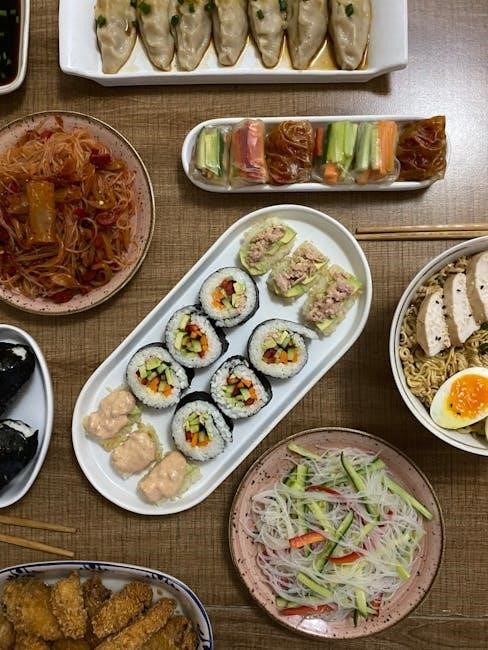
Ingredients for Summer Spring Rolls
Essential components include rice paper, fresh vegetables like cabbage and peppers, herbs for aroma, and a protein source – options range from mutton to lobster.
Essential Vegetables
A colorful array of vegetables forms the heart of summer spring rolls, contributing both texture and vital nutrients. Shredded red cabbage provides a vibrant hue and satisfying crunch, while thinly sliced bell peppers – red, yellow, or orange – add sweetness and visual appeal. Crisp cucumbers offer a refreshing coolness, balancing richer flavors. Consider incorporating carrots, julienned for delicate strands, and bean sprouts for an extra layer of texture.
Don’t hesitate to experiment with other options like lettuce or even avocado for creaminess. The key is to select vegetables that are firm enough to hold their shape when rolled, yet tender enough to be enjoyable with each bite. Proper preparation, such as shredding or slicing, is crucial for easy rolling and a harmonious blend of flavors.
Protein Options (Mutton, Lobster, etc.)
Summer spring rolls are wonderfully versatile, accommodating a range of protein choices to suit diverse palates; For a hearty option, consider mutton, cooked and shredded, offering a rich and savory flavor. Alternatively, lobster elevates the dish with a luxurious touch, especially paired with mango. Shrimp, cooked and peeled, is a classic and readily available choice.
Other possibilities include thinly sliced pork, chicken, or even tofu for a vegetarian alternative. When using meat, ensure it’s fully cooked before incorporating it into the rolls. The protein should be cut into manageable pieces or strips to facilitate easy rolling and even distribution throughout the spring roll.
Herbs and Seasonings
Fresh herbs are crucial for the vibrant flavor profile of summer spring rolls. Mint, cilantro, and Thai basil are staples, offering aromatic and refreshing notes. A generous handful of these herbs, finely chopped, brightens the entire dish. Seasoning is equally important; a touch of fish sauce adds umami, while a squeeze of lime juice provides acidity.
Consider a pinch of salt and pepper to enhance the flavors. Some recipes incorporate a hint of ginger or garlic for added complexity. Don’t be afraid to experiment with different herb combinations to find your perfect blend. These elements truly elevate the spring roll experience!
Preparing the Ingredients
Ingredient preparation is key! Vegetables need shredding or slicing, proteins require cooking, and a flavorful peanut dipping sauce must be crafted beforehand.
Vegetable Preparation Techniques (Shredding, Slicing)
Achieving the right texture for your summer spring roll vegetables is crucial for both taste and presentation. Shredding red cabbage creates a delicate, slightly sweet element, while thinly sliced cucumbers and bell peppers offer a satisfying crunch. Consider using a mandoline for uniform slicing, ensuring even distribution of flavors in each roll.
Proper technique prevents bruising or excessive moisture. For carrots, julienning or finely shredding works well. Remember to remove seeds from bell peppers before slicing into thin strips. These techniques not only enhance the visual appeal but also make the spring rolls easier to roll and enjoy, maximizing the fresh, vibrant flavors.
Cooking the Protein (if required)
Selecting your protein – whether it’s succulent mutton or delicate lobster – dictates the cooking method. Mutton benefits from a gentle simmer or quick stir-fry to ensure tenderness, seasoned with aromatic spices for depth of flavor. Lobster, conversely, requires careful steaming or poaching to maintain its sweetness and prevent overcooking.
Proper preparation is key. Ensure all proteins are fully cooked before incorporating them into the spring rolls. Allow the cooked protein to cool completely before assembly to prevent the rice paper from becoming soggy. This step guarantees a delightful texture and prevents structural issues during rolling and serving, enhancing the overall experience.
Making the Peanut Dipping Sauce
Crafting the perfect peanut sauce elevates the summer spring roll experience. Begin with a base of smooth peanut butter, blending it with warm water, soy sauce, and a touch of rice vinegar for balance. A squeeze of lime juice adds brightness, while a dash of honey or maple syrup introduces subtle sweetness.
Enhance the flavor with minced garlic, grated ginger, and a pinch of chili flakes for a gentle kick. Whisk all ingredients until smooth and creamy, adjusting the consistency with more water as needed. This versatile sauce complements the fresh flavors of the rolls, creating a harmonious and satisfying bite.
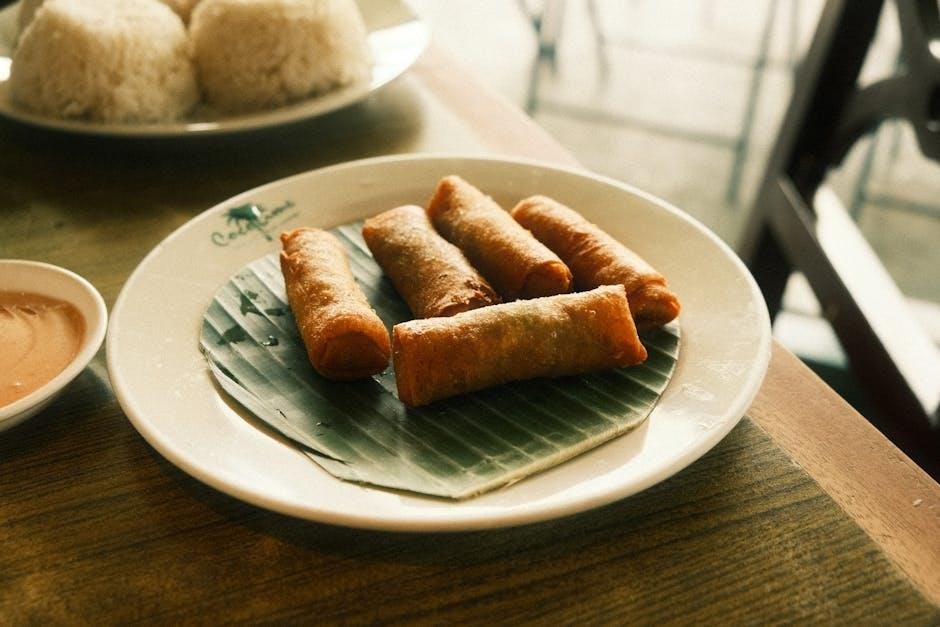
Rolling the Summer Spring Rolls
Rolling requires softened rice paper, a filled base, and careful technique—tucking and rolling tightly to create a neat, cohesive spring roll, ready for dipping!
Soaking the Rice Paper
Properly soaking the rice paper is crucial for successful spring roll creation. Fill a shallow dish with warm water – not too hot, or it will become overly sticky and tear easily. Gently submerge a single rice paper round at a time, ensuring it’s fully covered.
Soak for approximately 15-20 seconds, or until pliable but not falling apart. Avoid oversoaking, as this will make the paper too delicate to handle. Carefully remove the softened rice paper and lay it flat on a clean, slightly damp surface, like a cutting board.
Work quickly, as the rice paper will continue to soften as it sits. If it becomes too sticky, lightly dust your work surface with a bit of rice flour or cornstarch. Remember, practice makes perfect!
The Rolling Technique – Step-by-Step
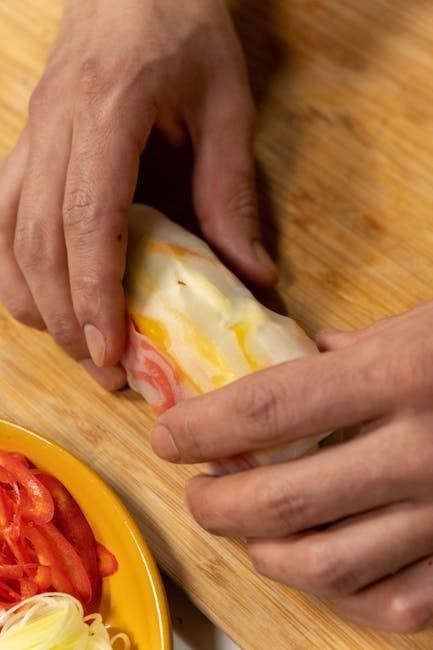
Begin by placing the softened rice paper on a clean surface. Arrange your filling ingredients in a neat line across the lower third of the paper, leaving space on the sides. Fold the bottom edge of the paper tightly over the filling.
Next, fold in the sides, like you’re wrapping a burrito, ensuring a snug fit. Continue rolling upwards, applying gentle but firm pressure to create a tight cylinder. The goal is a compact roll that won’t fall apart.
Practice makes perfect; don’t be discouraged if your first few rolls aren’t flawless. A little patience and a steady hand will yield beautiful, delicious spring rolls!
Tips for Tight Rolls
Achieving tight rolls is crucial for preventing spring rolls from falling apart. Ensure the rice paper is adequately softened, but not overly saturated, as this can cause tearing. Don’t overfill the rolls; a moderate amount of filling is easier to manage.
When rolling, apply consistent pressure and tuck the filling in firmly with each fold. A damp cloth can help seal the final edge of the roll. If tears occur, gently press them closed with a little water.
Remember, practice makes perfect! With a few attempts, you’ll master the technique for consistently tight and beautiful spring rolls.
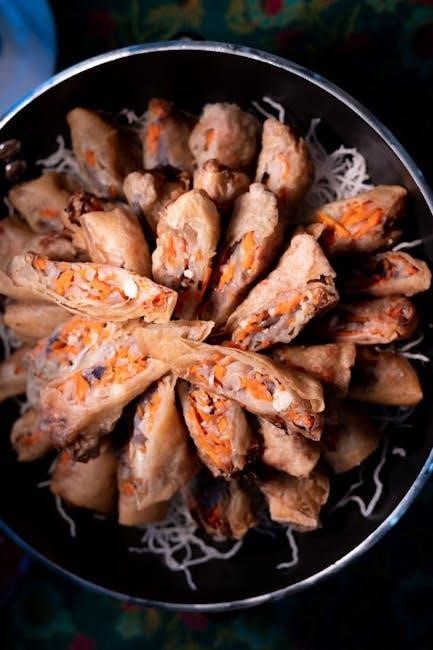
Variations of Summer Spring Rolls
Explore diverse flavors! From classic Vietnamese rolls to exciting combinations like Mutton and Lobster-Mango, customize fillings to suit your taste preferences.
Vietnamese Fresh Spring Rolls
Authentic Vietnamese Fresh Spring Rolls, known as Gỏi cuốn, are a cornerstone of Vietnamese cuisine, celebrated for their delicate balance of flavors and textures. These rolls typically feature vermicelli noodles, succulent shrimp, thinly sliced pork, and a generous helping of fresh herbs – mint, cilantro, and Vietnamese basil are essential.
The vibrant crunch comes from shredded lettuce and carrots, all neatly wrapped in translucent rice paper. A key element is the accompanying peanut dipping sauce, offering a creamy, savory, and slightly sweet counterpoint to the fresh ingredients. Families often enjoy making these together, letting everyone roll their own, creating a fun and interactive dining experience. They represent a light, healthy, and incredibly satisfying meal.
Mutton Spring Rolls
Mutton Spring Rolls present a hearty and flavorful twist on the classic summer roll, perfect for those seeking a more substantial filling. Tender, seasoned mutton takes center stage, often combined with aromatic onions and a blend of complementary spices. These rolls offer a delightful departure from traditional seafood or vegetarian options.
To balance the richness of the mutton, consider incorporating crisp vegetables like shredded cabbage and bell peppers. Fresh herbs, such as mint and cilantro, add a refreshing counterpoint. The rolling process remains the same, ensuring a delicate yet secure wrap. These meaty rolls are ideal for parties, offering a unique and satisfying appetizer or light meal.
Lobster-Mango Spring Rolls
Lobster-Mango Spring Rolls represent a luxurious and exotic variation, ideal for special occasions like Lunar New Year banquets. Sweet, succulent lobster meat pairs beautifully with the tropical sweetness of ripe mango, creating a harmonious blend of flavors. This combination offers a sophisticated and refreshing alternative to more conventional fillings.
To enhance the experience, consider adding a touch of chili for a subtle kick. Crisp vegetables, like cucumber and carrots, provide textural contrast. The vibrant colors of lobster and mango also contribute to the roll’s visual appeal. These spring rolls are a testament to culinary creativity, offering a truly memorable dining experience.
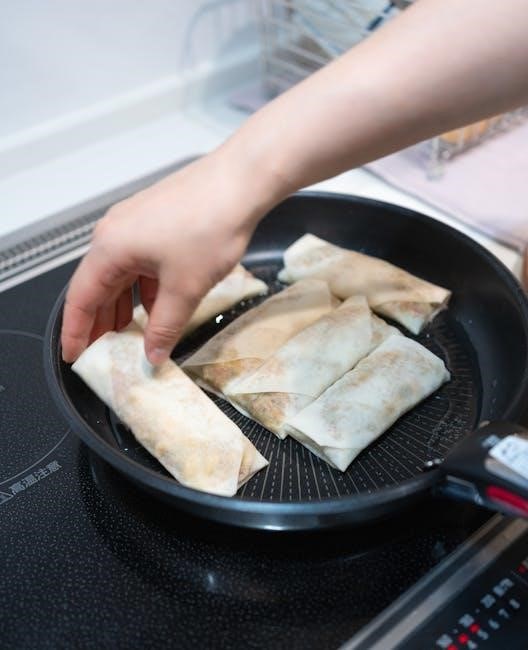
Serving and Enjoying Summer Spring Rolls
Enjoy these colorful rolls with a variety of dipping sauces, and present them beautifully for an impressive and flavorful culinary experience!
Best Dipping Sauces
Peanut Sauce reigns supreme, offering a creamy, savory, and slightly sweet complement to the fresh spring roll ingredients – a family favorite! Beyond peanut sauce, Hoisin Sauce provides a rich, umami-packed flavor, often enhanced with a touch of chili garlic sauce for a kick.
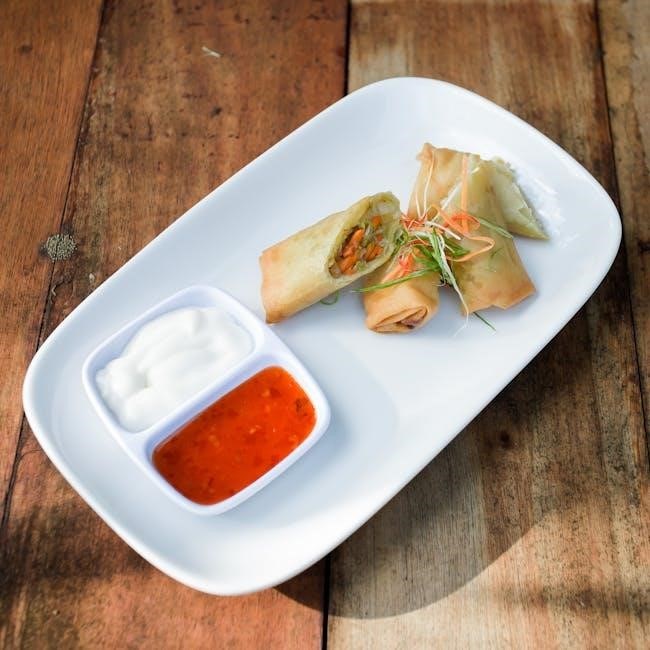
For a lighter option, consider a Nuoc Cham, a Vietnamese dipping sauce featuring fish sauce, lime juice, sugar, and chili. Its tangy and savory profile beautifully balances the roll’s freshness. Alternatively, a simple Sweet Chili Sauce delivers a delightful sweet and spicy contrast. Experimenting with different sauces elevates the spring roll experience, allowing guests to customize their perfect bite!
Presentation Ideas
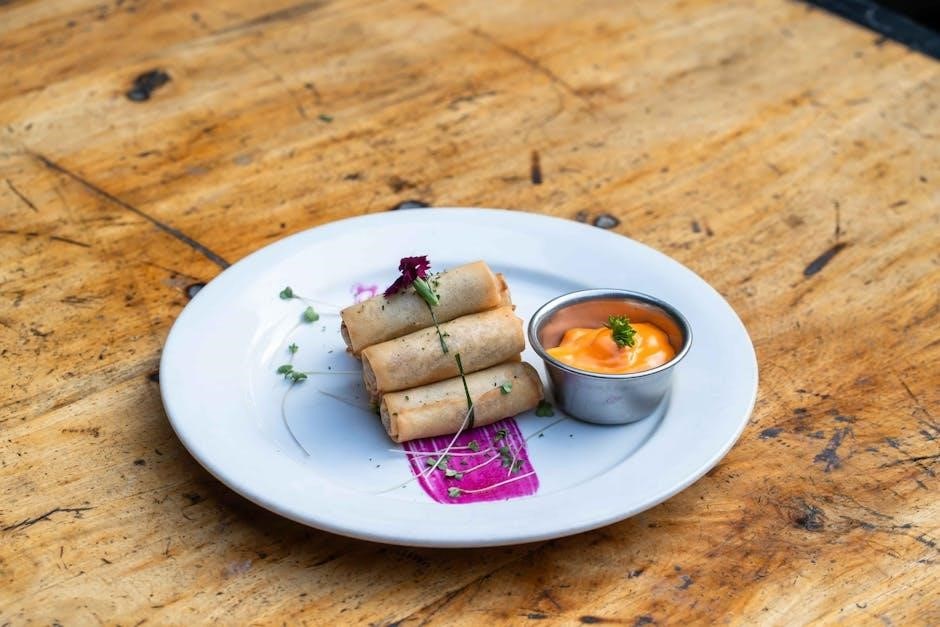
Arrange spring rolls artfully on a platter, showcasing their translucent wrappers and colorful fillings. Consider a bed of shredded lettuce or vibrant greens to enhance visual appeal. Garnish with fresh herbs like mint, cilantro, or Thai basil for an aromatic touch and added color.
Serve dipping sauces in individual ramekins or small bowls alongside the platter. A drizzle of sauce over the rolls just before serving adds a glossy finish. For a more interactive experience, present the ingredients separately and allow guests to roll their own spring rolls – a fun and engaging activity! A colorful presentation elevates the dining experience.
Storage and Freshness
Freshness is key with summer spring rolls; they are best enjoyed immediately after rolling. If needing to store, wrap each roll individually in slightly damp paper towels to prevent sticking and drying. Place the wrapped rolls in an airtight container.
Refrigerate for up to 24 hours, but be aware the rice paper may become slightly firmer. Avoid prolonged storage as the vegetables can become soggy. Do not freeze spring rolls, as the texture will be significantly altered upon thawing. Preparing smaller batches ensures optimal freshness and flavor, delivering the best culinary experience.
Rice Paper – A Key Component
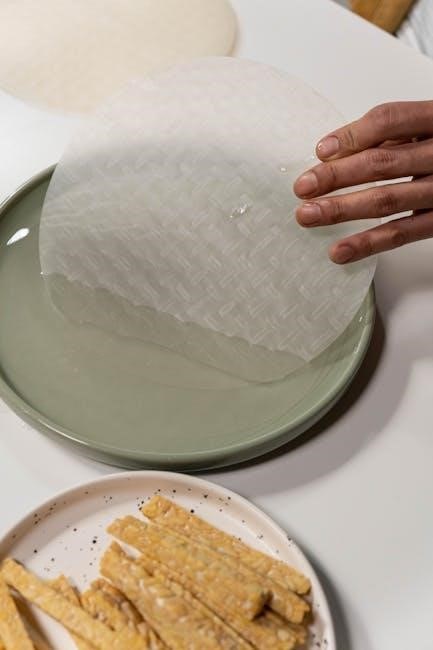
Rice paper rounds, available in most supermarkets, are sold as firm disks, typically patterned. Two common sizes exist, with 16cm being a frequently used option.
Where to Buy Rice Paper
Finding rice paper is generally quite easy these days, as its popularity has grown significantly. Most major supermarkets now stock rice paper rounds in the Asian foods aisle, often alongside noodles, sauces, and other related ingredients. Look for brands specifically labeled as “rice paper” or “spring roll wrappers.”
Asian grocery stores are another excellent source, offering a wider variety of brands, sizes, and even different types of rice paper. These stores often have more specialized options and competitive pricing. Online retailers, such as Amazon, also provide convenient access to rice paper, delivering directly to your doorstep. Checking local health food stores can also sometimes yield positive results, as they often carry natural and gluten-free options.
Different Sizes of Rice Paper
Rice paper rounds commonly come in two primary sizes, catering to different preferences and filling quantities. The larger size, typically around 22cm (8.5 inches) in diameter, is ideal for creating substantial spring rolls packed with ingredients, offering a more filling bite. These are great for those who enjoy a hearty meal.
Smaller rounds, approximately 16cm (6 inches) in diameter, are more manageable for beginners and perfect for delicate rolls with fewer fillings. They’re also excellent for appetizers or smaller portions. The choice depends on your desired roll size and the amount of filling you intend to use. Experimenting with both sizes can help you determine your preference!
Troubleshooting Common Issues
Tears and fall-apart rolls are common, but manageable! Gentle handling, proper soaking, and avoiding overfilling are key to achieving perfectly formed, intact summer spring rolls.
Rice Paper Tears
Dealing with torn rice paper is a frequent challenge when crafting summer spring rolls, but easily overcome with a few adjustments. Often, tears occur due to uneven soaking – ensure the entire sheet is submerged briefly, avoiding prolonged exposure to water.
If the paper becomes too sticky and fragile, it’s likely over-soaked. Gently lay the moistened sheet on a clean, slightly damp surface. Small tears can sometimes be patched with a tiny bit of water, acting like glue, but be cautious not to oversaturate.
Remember, rice paper is delicate; handle it with care and avoid rushing the process. Using a slightly larger sheet initially can also provide more material to work with, minimizing the impact of minor tears.
Spring Rolls Falling Apart
Preventing spring rolls from falling apart requires attention to filling distribution and the rolling technique. Overfilling is a common culprit; use a moderate amount of ingredients, ensuring they’re neatly arranged in a compact line.
Tight rolling is crucial. After the initial fold, pull back gently while continuing to roll, creating tension that holds the roll together. Ensure the ends are securely tucked in.
If the rice paper isn’t adhering properly, lightly dampen the edges before the final roll. Allowing the finished rolls to rest briefly can also help them set and maintain their shape, preventing unraveling during serving.