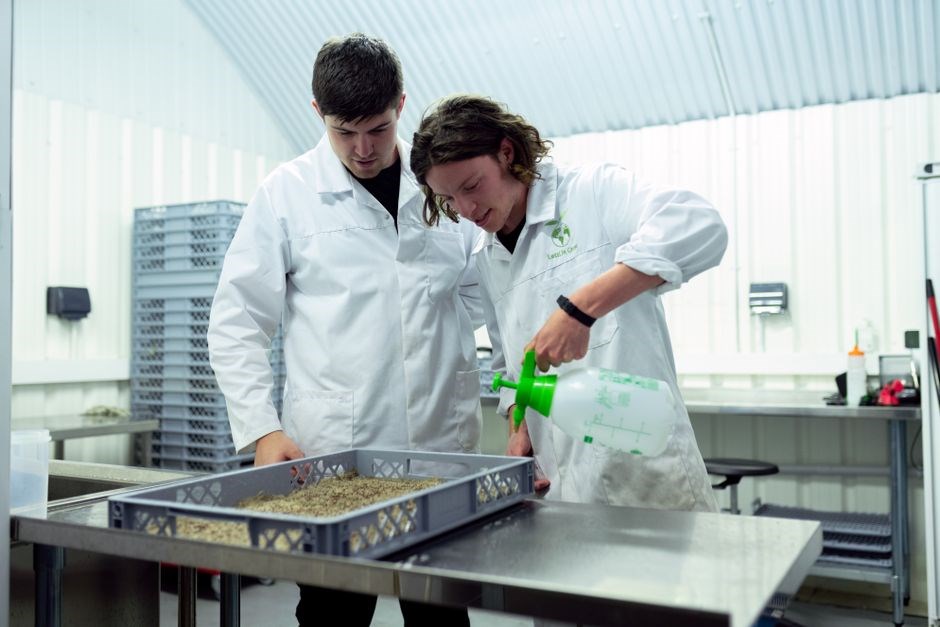
Organic waste initiatives‚ like the German campaign starting May 26‚ 2023‚ highlight material cycles.
Evaluating plastics and organic materials (April 9‚ 2025) is crucial for safe drinking water contact.
Understanding VOCs (March 19‚ 2018) and biogas production from organic waste (May 14‚ 2024)
demonstrates the broad relevance of organic material interactions‚ as detailed in various PDF resources.
What are Organic Reaction Mechanisms?
Organic reaction mechanisms are step-by-step sequences of elementary reactions that describe how a chemical transformation occurs at the molecular level. They aren’t merely about what reactants become products‚ but detail the precise pathway‚ including bond breaking and formation‚ and the order in which these events unfold. Considering the broader context of organic materials‚ as seen in initiatives like the German Organic Waste Campaign (starting May 26‚ 2023)‚ understanding these mechanisms is vital for managing material cycles.
PDF resources often illustrate these mechanisms using ‘electron pushing’ – a visual representation of electron movement with curved arrows. These depictions show how electron density shifts during each step‚ indicating nucleophilic and electrophilic attacks. The evaluation of plastics and organic materials in contact with drinking water (April 9‚ 2025) relies on understanding how these materials interact at a molecular level‚ often detailed in technical PDFs. Furthermore‚ the study of volatile organic compounds (VOCs – March 19‚ 2018) and their health effects necessitates a grasp of reaction pathways.
Essentially‚ a mechanism provides a plausible explanation for observed reactivity‚ supported by experimental evidence and theoretical calculations. It’s a dynamic model‚ not a static picture‚ and is crucial for predicting reaction outcomes and designing new synthetic strategies.
Importance of Understanding Mechanisms
Grasping organic reaction mechanisms transcends simply memorizing reactions; it empowers prediction and control. Knowing how a reaction proceeds allows chemists to anticipate products‚ optimize conditions‚ and troubleshoot failures. This is particularly relevant when considering the treatment of organic waste for biogas production (May 14‚ 2024) or compost‚ where understanding decomposition pathways is crucial for efficiency.
PDF resources dedicated to mechanism practice are invaluable. They provide worked examples‚ allowing students and researchers to trace electron flow and identify intermediates. The evaluation of organic materials used in drinking water contact (April 9‚ 2025) demands a mechanistic understanding of potential leaching or degradation processes‚ often documented in detailed PDF reports. Similarly‚ assessing the health effects of volatile organic compounds (VOCs – March 19‚ 2018) requires knowledge of their formation and reactivity.
Ultimately‚ a mechanistic perspective fosters innovation. It enables the design of novel reactions and the development of more sustainable chemical processes‚ aligning with initiatives like the German Organic Waste Campaign (May 26‚ 2023) focused on resource efficiency.
Fundamental Concepts in Organic Chemistry
Understanding bonding‚ electron flow‚ and nucleophile/electrophile interactions is vital. PDF resources detailing organic material evaluation (April 9‚ 2025) and VOC behavior (March 19‚ 2018) exemplify these concepts.
Bonding and Structure
The foundation of organic chemistry lies in understanding chemical bonding and how it dictates molecular structure. Covalent bonds‚ formed by sharing electrons‚ are paramount‚ influencing reactivity and the pathways organic reactions take. Examining the structure of organic molecules – considering factors like hybridization‚ bond angles‚ and functional groups – is essential for predicting reaction outcomes.
PDF resources focusing on organic materials in contact with drinking water (April 9‚ 2025) demonstrate how structural variations impact material properties and stability. Similarly‚ understanding the composition of volatile organic compounds (VOCs – March 19‚ 2018) requires knowledge of their bonding arrangements. The German Organic Waste Campaign (May 26‚ 2023) implicitly relies on understanding the structural breakdown of organic waste during composting or biogas production.
Analyzing these structures allows chemists to visualize electron distribution and identify potential reactive sites. This structural awareness is crucial when interpreting and predicting the steps involved in organic reaction mechanisms‚ as detailed in specialized PDF guides.
Electron Pushing Conventions
Electron pushing is a visual method used to illustrate the movement of electrons during organic reactions. Curved arrows depict the flow of electron pairs‚ showing how bonds break and form. Mastering these conventions is vital for understanding reaction mechanisms and predicting product formation. It’s a shorthand for tracking valence electrons and understanding reactivity.
PDF resources detailing the evaluation of organic substances (4MS Initiative) often utilize electron pushing to demonstrate how materials interact and degrade. Understanding VOC behavior (March 19‚ 2018) also benefits from visualizing electron flow during their formation and reactions. The treatment of organic waste (May 14‚ 2024) involves complex electron transfer processes‚ often illustrated with these conventions.
These conventions aren’t just about drawing arrows; they represent a fundamental shift in electron density. Numerous PDF practice materials are available to hone this skill‚ enabling accurate interpretation of complex organic reaction mechanisms.
Nucleophiles and Electrophiles
Nucleophiles‚ “nucleus-loving” species‚ are electron-rich and donate electron pairs to form new bonds. Conversely‚ electrophiles‚ “electron-loving” species‚ are electron-deficient and accept electron pairs. Identifying these roles is central to understanding reaction mechanisms. Their interaction drives many organic transformations‚ from simple substitutions to complex multi-step syntheses.
PDF resources evaluating organic materials in contact with drinking water (April 9‚ 2025) often detail how nucleophilic attack can lead to material degradation. Similarly‚ understanding VOC health effects (March 19‚ 2018) requires knowledge of their electrophilic or nucleophilic reactivity with biological molecules. The breakdown of organic waste (May 14‚ 2024) also involves nucleophilic and electrophilic processes.
Numerous practice problems in PDF format focus on identifying nucleophiles and electrophiles in various scenarios‚ solidifying this foundational concept for mastering organic reaction mechanisms.

Types of Organic Reactions
PDF guides detail addition‚ substitution‚ and elimination reactions‚ crucial for understanding organic waste treatment (May 14‚ 2024) and material evaluations (April 9‚ 2025).
Addition Reactions
Addition reactions‚ thoroughly explained in numerous organic reaction mechanism PDF resources‚ involve the combination of two or more molecules to form a larger one. These are fundamental processes in organic chemistry‚ often seen in the context of unsaturated hydrocarbons like alkenes and alkynes. The evaluation of plastics and organic materials (April 9‚ 2025) often necessitates understanding how these materials participate in addition reactions during their lifecycle.
Considering organic waste (May 14‚ 2024)‚ addition reactions can be relevant in the breakdown or modification of complex organic molecules. The study of volatile organic compounds (VOCs – March 19‚ 2018) also touches upon addition processes as these compounds interact with other molecules in the environment. Detailed PDF guides provide step-by-step mechanisms‚ illustrating electron flow and intermediate formation‚ crucial for predicting reaction outcomes and optimizing processes related to material degradation and biogas production.
These resources often categorize addition reactions based on the type of reactants involved‚ such as electrophilic or nucleophilic addition‚ providing a comprehensive understanding of the underlying principles.
Substitution Reactions
Substitution reactions‚ comprehensively detailed in organic reaction mechanism PDF guides‚ involve the replacement of one atom or group of atoms in a molecule with another. These reactions are central to synthesizing diverse organic compounds and are frequently encountered when evaluating the stability and reactivity of materials like plastics (April 9‚ 2025). Understanding these mechanisms is vital when considering the interaction of volatile organic compounds (VOCs – March 19‚ 2018) with surfaces.
The German Organic Waste Campaign (May 26‚ 2023) indirectly highlights the importance of substitution reactions in the breakdown of complex organic matter. PDF resources often categorize substitution reactions as SN1 or SN2‚ detailing the kinetic and stereochemical aspects of each pathway. These resources illustrate how steric and electronic effects influence the reaction rate and product distribution.
Furthermore‚ the evaluation of materials in contact with drinking water requires a thorough understanding of potential substitution reactions that could lead to the release of harmful substances‚ as outlined in positive lists for organic materials.
Elimination Reactions
Elimination reactions‚ thoroughly explained in organic reaction mechanism PDF materials‚ involve the removal of atoms or groups from adjacent carbon atoms‚ leading to the formation of a multiple bond – typically a double or triple bond. These reactions are crucial in the breakdown of organic waste‚ as seen in biogas production (May 14‚ 2024)‚ and are often contrasted with substitution reactions in detailed PDF guides.
Like substitution‚ elimination reactions are categorized‚ commonly as E1 or E2‚ with PDF resources detailing the influence of factors like base strength and steric hindrance. The formation of VOCs (March 19‚ 2018) can sometimes be a byproduct of unwanted elimination pathways. Understanding these pathways is vital for optimizing reaction conditions.
The evaluation of plastics and organic materials (April 9‚ 2025) also considers potential elimination reactions that could lead to degradation or the release of undesirable compounds. The German Organic Waste Campaign (May 26‚ 2023) demonstrates the practical application of understanding these decomposition processes.

Common Organic Reaction Mechanisms
PDF resources detail SN1‚ SN2‚ E1‚ and E2 mechanisms‚ vital for understanding organic waste breakdown (May 14‚ 2024) and material evaluations (April 9‚ 2025).
SN1 Reaction Mechanism
SN1 reactions‚ extensively covered in PDF guides‚ proceed in two distinct steps. Initially‚ the leaving group departs‚ forming a carbocation intermediate – a rate-determining step. This carbocation’s stability is paramount‚ influenced by factors like hyperconjugation and inductive effects. Subsequently‚ a nucleophile attacks the carbocation‚ completing the substitution.
The mechanism’s unimolecular nature (hence ‘SN1’) means the rate depends solely on the concentration of the substrate. Tertiary carbocations are favored due to their stability‚ making SN1 reactions more common with tertiary alkyl halides;
Considering organic waste treatment (May 14‚ 2024)‚ understanding SN1 helps model degradation pathways. Evaluating materials in contact with drinking water (April 9‚ 2025) requires knowledge of potential SN1 reactions involving contaminants. PDF resources often illustrate these steps with detailed diagrams and energy profiles‚ aiding comprehension of this fundamental organic process.
SN2 Reaction Mechanism
SN2 reactions‚ thoroughly detailed in numerous PDF resources‚ occur in a single‚ concerted step. A nucleophile attacks the substrate simultaneously with the departure of the leaving group‚ resulting in inversion of configuration at the reaction center. This ‘backside attack’ is crucial‚ and steric hindrance significantly impacts the reaction rate.
Unlike SN1‚ SN2 is bimolecular – the rate depends on the concentrations of both the substrate and the nucleophile. Primary alkyl halides react most readily due to minimal steric bulk. The evaluation of organic materials (April 9‚ 2025) often considers SN2 pathways for potential degradation or modification.
Understanding SN2 is vital when analyzing volatile organic compounds (VOCs – March 19‚ 2018) and their interactions with surfaces. PDF guides frequently present reaction coordinate diagrams illustrating the transition state and energy changes involved in this fundamental organic transformation.
E1 Reaction Mechanism
E1 reactions‚ comprehensively explained in many PDF guides‚ proceed through a two-step process. First‚ the leaving group departs‚ forming a carbocation intermediate. This is the rate-determining step. Subsequently‚ a base abstracts a proton from a carbon adjacent to the carbocation‚ leading to alkene formation. Like SN1‚ E1 is unimolecular‚ with the rate dependent solely on the substrate concentration.
Tertiary alkyl halides favor E1 due to carbocation stability. The quality standards for treated organic waste (April 22‚ 2016) may involve assessing E1-derived byproducts. PDF resources often emphasize the importance of heat in promoting E1 reactions‚ as it facilitates carbocation formation.
Understanding E1 is relevant when considering VOCs (March 19‚ 2018) and their potential decomposition pathways. Detailed diagrams in PDF materials illustrate the carbocation intermediate and the proton abstraction step‚ crucial for visualizing the mechanism.
E2 Reaction Mechanism
E2 reactions‚ thoroughly detailed in numerous PDF resources‚ are concerted‚ one-step elimination processes. A strong base removes a proton adjacent to the leaving group simultaneously with the departure of the leaving group‚ forming a double bond. This requires a specific anti-periplanar geometry – the proton and leaving group must be on opposite sides of the molecule.
Primary and secondary alkyl halides readily undergo E2 reactions‚ especially with bulky bases. The evaluation of organic materials (April 9‚ 2025) may consider E2 byproduct formation. PDF guides often highlight the stereospecificity of E2‚ meaning the alkene’s stereochemistry is predictable.
Considering biogas production from organic waste (May 14‚ 2024)‚ E2-like processes could be involved in decomposition pathways. Visual aids in PDF materials demonstrate the anti-periplanar transition state‚ essential for grasping the mechanism’s nuances.

Factors Influencing Reaction Mechanisms
PDF guides detail how steric and electronic effects‚ alongside solvent properties‚ dictate reaction pathways.
Evaluating organic materials (April 9‚ 2025) considers these factors‚
while VOC analysis (March 19‚ 2018) highlights environmental impacts.
Steric Effects
Steric effects profoundly influence organic reaction mechanisms‚ as detailed in numerous PDF resources dedicated to the subject. These effects arise from the physical bulk of substituents around a reaction center‚ impacting the accessibility of that site to incoming reactants. Larger groups create steric hindrance‚ slowing down or even preventing reactions.
Consider the evaluation of organic materials in contact with drinking water (April 9‚ 2025); the spatial arrangement of molecules dictates their interaction with the water and the material’s surface. Similarly‚ understanding VOCs (March 19‚ 2018) requires considering how molecular shape affects their interaction with receptors.
The German Organic Waste Campaign (May 25‚ 2023)‚ while focused on waste management‚ implicitly acknowledges steric considerations in the breakdown of complex organic molecules. PDF guides often illustrate steric effects with examples like SN2 reactions‚ where bulky groups on the carbon undergoing substitution dramatically reduce the reaction rate. Ultimately‚ steric effects are a critical factor in predicting and controlling reaction outcomes.
Electronic Effects
Electronic effects are paramount in understanding organic reaction mechanisms‚ and are thoroughly explored in dedicated PDF study materials. These effects stem from the distribution of electrons within molecules‚ influencing reactivity. Electron-donating groups increase electron density‚ making a site more attractive to electrophiles‚ while electron-withdrawing groups have the opposite effect.
The assessment of organic materials for drinking water contact (April 9‚ 2025) relies heavily on understanding how electronic properties affect leaching and stability. Similarly‚ the health impacts of VOCs (March 19‚ 2018) are tied to their electronic interactions with biological systems.
Even the breakdown of organic waste (May 25‚ 2023) involves electronic shifts during decomposition. PDF resources often demonstrate these effects using resonance and inductive effects‚ explaining how substituent groups alter the charge distribution and‚ consequently‚ the reaction pathway. Mastering electronic effects is crucial for predicting reaction rates and product formation.
Solvent Effects
Solvent effects profoundly influence organic reaction mechanisms‚ a topic extensively covered in detailed PDF guides. Solvents can stabilize or destabilize reactants‚ transition states‚ and products‚ altering reaction rates and selectivity. Polar protic solvents‚ like water and alcohols‚ can solvate ions effectively‚ favoring reactions involving charged intermediates. Conversely‚ polar aprotic solvents‚ such as DMSO and acetone‚ solvate cations well but poorly solvate anions‚ impacting SN2 reactions.
The evaluation of organic materials for drinking water contact (April 9‚ 2025) considers solvent interactions and potential leaching. Understanding VOC behavior (March 19‚ 2018) also requires knowledge of solvent partitioning. Even organic waste treatment (May 14‚ 2024) processes are affected by solvent-like properties of the reaction medium.
PDF resources often illustrate solvent effects using concepts like dielectric constant and hydrogen bonding. Choosing the appropriate solvent is‚ therefore‚ a critical aspect of reaction design and optimization‚ directly impacting the observed mechanism.

Resources for Studying Organic Reaction Mechanisms
PDF guides detailing organic waste initiatives (May 26‚ 2023) and material evaluations (April 9‚ 2025) offer practical examples. VOC studies (March 19‚ 2018) and biogas research (May 14‚ 2024) provide context.
Online Databases and Tools
Numerous online platforms facilitate the study of organic reaction mechanisms‚ often providing downloadable PDF resources. These tools are invaluable for students and researchers alike‚ offering detailed step-by-step illustrations and explanations. Considering the broader context of organic materials‚ as seen in initiatives like the German Organic Waste Campaign (starting May 26‚ 2023)‚ understanding the underlying mechanisms becomes even more pertinent.
Databases focusing on material safety‚ such as those evaluating plastics for drinking water contact (April 9‚ 2025)‚ often include mechanistic details regarding polymer degradation or formation. Furthermore‚ resources addressing volatile organic compounds (VOCs – March 19‚ 2018) frequently detail the reaction pathways involved in their creation and breakdown. Exploring biogas production from organic waste (May 14‚ 2024) also necessitates understanding the enzymatic and chemical mechanisms at play.
Specialized websites offer interactive mechanism viewers and searchable databases of reactions. Many universities also provide open-access PDF lecture notes and problem sets. These resources‚ combined with a grasp of broader organic material considerations‚ create a robust learning environment.
Textbooks and Academic Literature
Traditional textbooks remain a cornerstone for learning organic reaction mechanisms‚ often supplemented by accompanying PDF solutions manuals and practice problems. These resources provide a foundational understanding‚ crucial given the increasing focus on organic materials – from waste management (German campaign‚ May 26‚ 2023) to ensuring safe drinking water contact (plastics evaluation‚ April 9‚ 2025).

Advanced academic literature‚ including journal articles and specialized monographs‚ delves into the intricacies of specific mechanisms. Research concerning volatile organic compounds (VOCs – March 19‚ 2018) and their health effects frequently details the underlying reaction pathways. Similarly‚ studies on biogas production (May 14‚ 2024) rely heavily on mechanistic understanding.
Comprehensive organic chemistry textbooks typically dedicate substantial chapters to reaction mechanisms‚ often including detailed diagrams and explanations. Accessing supplementary PDF materials‚ such as instructor’s manuals and chapter summaries‚ can further enhance comprehension. These resources‚ combined with current research‚ provide a complete picture.
PDF Resources for Mechanism Practice
Numerous PDF resources are available online for practicing organic reaction mechanisms‚ complementing textbook learning. These often include worked examples‚ practice problems with solutions‚ and detailed mechanism diagrams. Considering the importance of organic material evaluation (April 9‚ 2025) and waste management initiatives (May 26‚ 2023)‚ a strong mechanistic understanding is vital;
Specifically‚ PDF collections focusing on SN1‚ SN2‚ E1‚ and E2 reactions are widely accessible. These resources frequently present reaction schemes and challenge students to propose the complete mechanism‚ step-by-step. Understanding VOC behavior (March 19‚ 2018) and biogas production (May 14‚ 2024) also benefits from mechanism practice.
University websites and online learning platforms often host PDF worksheets and quizzes designed to test mechanistic knowledge. Utilizing these resources alongside traditional textbooks provides a robust learning experience‚ preparing students for advanced studies and research in organic chemistry and related fields.